
Jess Campbell
A forensic linguist, Jess has helped shape Navigate360’s Digital Threat Detection since 2019, researching the language of risk—from suicidal ideation and self-harm to the threatening language students now use to evade filters.
• on-demand webinar
AI-generated deepfakes, algorithmic harm, and digital tools for targeted violence tactics are creating new safety risks—and new legal questions.
15% of high schoolers—2.3 million students—know of an AI-generated nude at their school. When one surfaces, who owns the response—and are there any legal obligations?
| 30% | The liability landscape is quickly shifting—sexual misconduct already accounts for nearly 30% of the largest claims facing educational institutions. |
AI fabricated content is making cases harder to catch—and easier to miss. The risk runs across safety: harassment, threats, and self-harm.
Depending on your state, inaction can trigger Title IX obligation, or cyberbullying laws—and the window to act is shorter than most schools realize.
Many schools don’t have a framework or taskforce for any of it—and that’s exactly what this session addresses.
Watch as a school safety expert who led an AI taskforce and a forensic linguist who studies how students encode risk and a closer look at the patterns behind AI-driven threats like deepfakes, and exactly what to do when a concern lands on your desk.
Why this matters
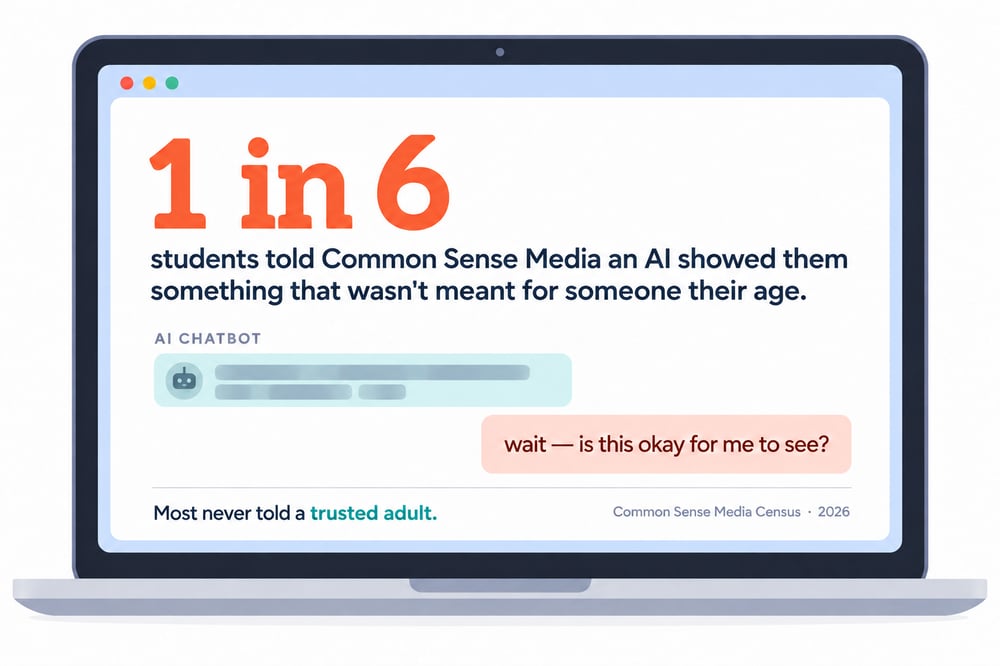
Cyberbullying and planning violent attacks aren’t new threats for schools, but AI reshaped them and added risks leaders have never had to weigh. Harm to students can be generated in seconds. A nude can be built from a yearbook photo. Violent planning can happen in a chatbot. A student can bring distress to AI instead of a counselor—and nearly a third already do.
What You'll Learn:
This digital landscape is shifting faster than anyone can predict. Protecting your students and your district starts with knowing how to respond—today and whatever comes next.
MEET YOUR SPEAKERs
Our experts show you how to read digital threats and what to do when one surfaces.
A forensic linguist, Jess has helped shape Navigate360’s Digital Threat Detection since 2019, researching the language of risk—from suicidal ideation and self-harm to the threatening language students now use to evade filters.
Dr. Willemin leads school safety strategy at Navigate360 with 23+ years in education across three states. Former Executive Director of School Safety at Oxford Community Schools, she also led the AI task force and served as a Title IX coordinator. She’s a certified trainer in ALICE, threat assessment, and crisis response.
What You'll Learn
The three ways AI becomes a safety concern—as a source for harmful advice, a tool for planning violence, and a means of creating deepfakes.
What’s on you when a concern surfaces on a school device, a personal phone, or off campus entirely, and where the line actually falls.
When a signal calls for a threat assessment, behavioral check-in, a parent call, or law enforcement—so your team can act with confidence.
How administrators, counselors, SROs, and mental health staff coordinate when a concern surfaces, and how the right system keeps concerns from slipping.
AI is changing what threats look like and where they live. Schools need updated instincts, updated systems, and new eyes for the warning signs.
“It’s not just ‘let’s check the box.’ More importantly: how are we going to help this student?”
Give your team the skills to read what’s surfacing, and your district the systems to respond.