
Skip to content

Student Behavioral & Well-Being

Addressing the Youth Mental Health Crisis

The U.S. Surgeon General and leading pediatric organizations have declared a national emergency in youth mental health. While recent data shows early signs of improvement, the picture remains sobering—2 in 5 high schoolers still report persistent feelings of sadness or hopelessness, with rates even higher for girls and LGBTQ+ youth.

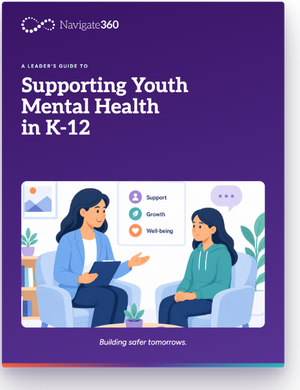
This guide breaks down what's driving the crisis, what schools are uniquely positioned to do about it, and how a layered approach to safety and well-being can change outcomes for students.

"Across the country we have witnessed dramatic increases in Emergency Department visits for all mental health emergencies including suspected suicide attempts." 
—American Academy of Pediatrics, American Academy of Child and Adolescent Psychiatry, and Children's Hospital Association 

Schools Are on the Front Lines of a Crisis They Didn't Create

Today's youth are growing up immersed in an online world that exposes them to bullying and harmful content alongside academic pressure, instability at home, and ongoing stress on families. The toll is showing up at school.

Findings from the most recent Navigate360 poll:

  • Almost 40% of teens don't believe their school handles bullying and harassment effectively
  • Half of students aren't confident their schools can identify those thinking of self-harm
  • 50% of students aren't confident in the training they've received for emergencies
  • Nearly 50% of students have missed school due to safety concerns

When students don't feel safe, they can't learn.

Inside the Guide: Addressing the Youth Mental Health Crisis

This guide walks school leaders through the root causes of the youth mental health crisis—and what a holistic, layered response looks like. What's inside:

  • What's driving teen anxiety and depression, from academic stressors to digital safety
  • How student perceptions of safety affect mental health outcomes
  • How to detect "leakage" and intervene before issues escalate
Nav360-K12-EB-030122-Addressing the Youth Mental Health Crisis-1080x1080
"We have everything in there [and] we’re able to keep track of everything that’s going on. All the students who’ve been referred, those that were open, those that are closed, the category levels — all of that. It is helpful having a system that maintains all of that for us." 
—Dr. Nkechi Madueke, Multidisciplinary Student Supports Coordinator, Arlington Independent School District 
"I’m thankful that my best before and-after stories are all about well-being, not how our district handled a fire or an active shooter, because we have been fortunate to not experience such terrible events. In large part, I’ve been able to focus even more of my energy on the well-being side because of the burden that Navigate360 has relieved from me."
—Tom Livezey, Oakridge Public Schools 

Build a System That Supports Every Student

Students can't reach their full academic potential unless they feel safe and supported at school. This guide is designed to help school leaders take a layered, holistic approach to student safety and well-being—and turn insights into action before a student is in crisis.

©2026 Navigate360